Horticulture Students at ARC learn hands-on skills in landscaping, floristry and plant production
American River College’s Horticulture Department prepares students for careers in California’s multi-billion dollar horticulture industry. They learn about plant production, landscape design and floristry while cultivating the Environmental Resource Area on campus. From seed to plant, students raise plants that are sold on campus at the weekly floral sales and the annual plant sale.
California’s dominance in agriculture is well-known, from producing all of the country’s commercial almonds to Sacramento claiming the slogan “America’s Farm-to-Fork Capital.” But the horticulture industry itself is worth $3 billion, according to the U.S. Department of Agriculture’s National Agricultural Statistics Service (NASS). This includes the sales of nursery stock, Christmas trees, cut flowers and food producing plants.
ARC offers classes to students looking for degrees and certificates in horticulture, landscape design technology, sustainable landscaping and floristry.
Sustainability draws students who are looking to make a positive difference in the fight against climate change.
“It feels so urgent to do something, this is a concrete way to make a difference,” said Leo Vignelli, a horticulture student. “Soil is the biggest carbon sequestering machine there is. It gives you hope that we can do something about climate change.”
Some students are attracted to the program by the beauty of nature and the Environmental Resource Area, like Gail Jones.
“I came in here and I saw all the plants that were growing and the greenhouses and looked at all the classes and I was just really excited to be part of it,” Jones said.
In the three-acre Environmental Resource area, horticulture students and student employees maintain a greenhouse, flower beds, food garden, fruit orchard, grape vineyard and hop field. A hoop house, a type of solar greenhouse, is currently being built as well.
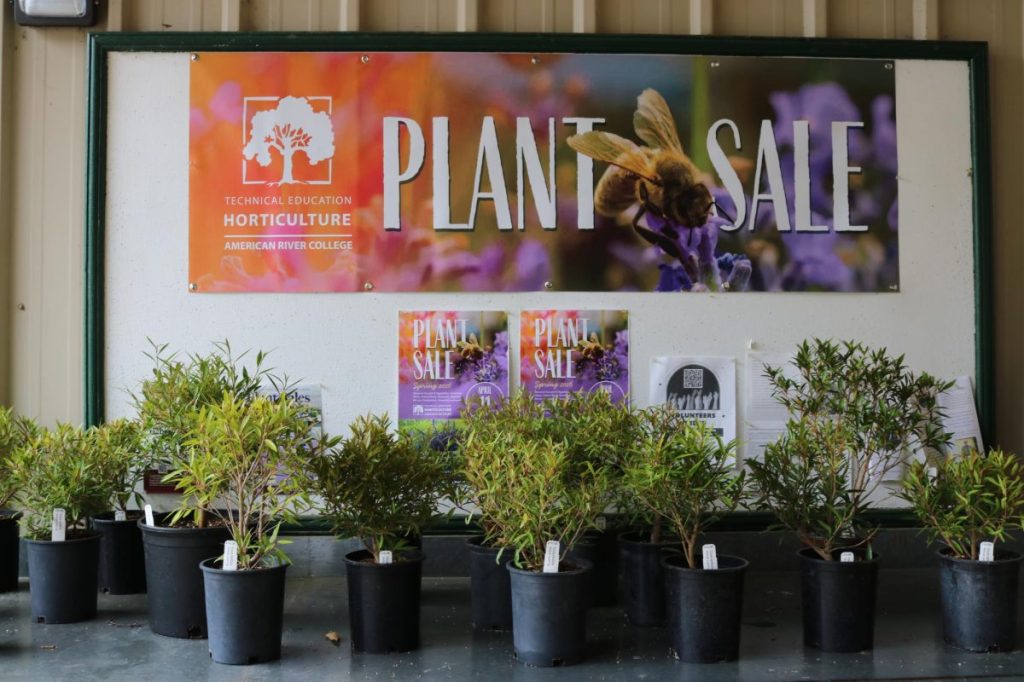
In spring, the horticulture department puts on a plant sale where plants that students propagated are available for purchase by the community. This past April, people lined up in the pouring rain in an effort to get first pick.

“We have a really good variety of native plants, variety of ornamental, indoor plants. The prices are unbeatable because they’re just covering the costs and not making profit really,” Vignelli said.
Any profits generated by the plant sale are given back to the program and maintenance of the Environmental Resource Area.
“We’ve got three acres, we’ve got greenhouses, and it takes more than just certified staff to actually take care of it all,” said Cielo Sichi, the horticulture department chair. “And so we hire student employees and that money supports that goal.”
Students worked during the sale too, helping people wheel carts of plants out to their cars in the rain. The greenhouse was almost completely cleared out, and the community jumped at the chance to buy pepper, tomato and strawberry plants for their gardens. Drought-tolerant native, Mediterranean and Australian plants with colorful blooms attracted people looking to update their landscaping.

“I had participated in a plant propagation class last semester and they were just little tiny little seeds that we grew or they were just from a plug,” Jones said. “It’s really exciting. It’s like you feel like you brought them up from babies.“
This kind of hands-on experience prepares ARC’s students for careers in the horticulture industry, but can also enrich anyone’s skillset in taking care of their own yard or garden.
“Some people are going for the degree and looking to become horticulture professionals,” Vignelli said. “A lot of people, though, are going because they want to grow plants better or they want to understand plants better.”
The plant sale will be back again next spring, giving the students plenty of time to nurture the next generation of plants to sell.
 Eliana's Writing
Leave a comment